AIdea x 教育部攜手推廣人才庫

如同網際網路深刻改變人類社會,人工智慧正掀起新一波革命。為提升整體社會競爭力,教育部與AIdea平台合作推動「AIdea x 教育部攜手推廣人才庫」計畫,將培養具備AI協作與研發能力的頂尖人才視為核心任務。
本計畫之重心為「標註暨競賽」,著重在目標明確的題目,旨在培養學生應對AI挑戰的經驗,並將人工智慧的前沿技術與觀念實質導入教育體系。藉由AIdea平台建立的系統化人才庫,不僅能縮短學用落差,更期望學生將來投入實習場域或職場進行實戰時,能真正做到學以致用,攜手臺灣在AI浪潮中奪得引領未來的先機。


指導單位——教育部簡介

中華民國教育部為全國學術、文化及教育行政的最高主管機關。其核心宗旨在於制定全國性的教育政策、推動學術研究發展、普及文化建設,並致力於提升全民素養與國家整體競爭力。教育部的職責涵蓋了從學前教育、國民基本教育、高級中等教育、到高等教育與終身學習的全面規劃與督導,確保國民享有公平、優質的教育資源。


指導單位——教育部資科司簡介

資訊及科技教育司「結合資訊、科技與人文,引領學校邁向永續發展新世紀」之願景,規劃「前瞻人才培育」、「精緻數位學習」、「科研倫理素養」、「數位公義關懷」、「校園環境永續」五大目標,建構以「人」為中心的學習環境,培育具關懷社會與環境之現代公民,強化國家永續發展。


教育部人工智慧競賽與標註資料蒐集計畫

本計畫【人工智慧競賽與標註資料蒐集】為教育部所發起的人工智慧技術及應用人才培育計畫中的其中一項子計畫,透過訂定競賽議題,並預計每年舉辦二至三項AI競賽,藉由搭配學期時間與學校課程合作,老師可審核學生學習一學期後將理論運用在實際問題上的能力,且因競賽資料較貼近生活實際狀況,而非針對教學方便所製作出簡單的數據,學生需要更深入思考才可達到標準,AI競賽將會經過競賽審查委員嚴格審查後頒發獎金及獎狀,以資鼓勵學生們參與培育更多AI人才。

/ 議題入口 /
In Progress

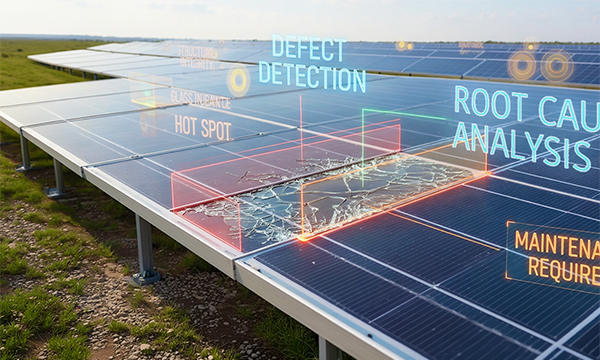
Solar Panel Defect Detection and Root Cause Analysis Competition Integrating Few-Shot Learning, Data Generation, and Multimodal Vision-Language Models (VLMs)

In response to global climate change and the energy transition, Taiwan has set net-zero emissions by 2050 as a national goal, and solar photovoltaics are also a key focus of renewable energy development. As installed capacity expands, solar panels are exposed over long periods to high temperatures, high humidity, windblown sand, and mechanical stress. Defects such as microcracks, hot spots, PID effects, encapsulation aging, and glass damage may reduce power generation efficiency, shorten equipment service life, and even pose safety risks.This competition is based on visible-light (RGB) and thermal infrared (Thermal IR) images. Participants are required to detect defect locations and generate textual descriptions of the root causes of the defects. Participants may employ few-shot learning, synthetic data generation, weather adaptation, and multimodal vision-language models to develop intelligent solar panel inspection systems with low data requirements, generalization capability, and interpretability.For inquiries, please contact: aicup2026.solardefect@gmail.com※Registration for this competition topic is expected to be conducted through the AI CUP registration system. The registration link and platform operation instructions shall be subject to the official announcement.EligibilityStudents who hold active student status in the Republic of China at the time of registration, including senior high school, vocational high school, college, university, and graduate students, may form teams to participate.Members of the general public may also participate and will be included in the overall ranking. Teams in the General Division are eligible only for certificates issued by the organizer and are not eligible for prize money or other material awards.A team composed entirely of students will be classified in the Student Division. A team with any non-student member will be classified in the General Division.Eligibility for prize money and other material awards, including GPU computing resources, is limited to teams whose members all hold active student status in the Republic of China at the time of registration. Supporting documentation must be provided when claiming the award.Competition Guidelines and Judging CriteriaThis competition is based on the solar panel visible-light and infrared image datasets provided by the organizer. Participating teams are required to develop an artificial intelligence system capable of performing defect localization and root cause text analysis. During the result-submission period, the system will display only Public evaluation scores and the Public Leaderboard for model development and performance adjustment. The final ranking will primarily be based on the Private Leaderboard evaluation result calculated from each team's last valid submission made before the result-submission deadline, together with a review of the source code and technical documentation.Competition ProcedureStage 1: Competition Registration and Dataset ReleaseRegistration will open on September 16, 2026. The organizer will make the Training set available on September 16, 2026, and the Testing set available on September 30, 2026, for participating teams to download. Teams may use the Training set for data preprocessing, data augmentation, model training, and parameter adjustment, and use the completed model to generate prediction results for the Testing set.Stage 2: Prediction Result Submission and Public LeaderboardParticipating teams must upload their Testing set prediction results to the online scoring and ranking system in the format specified by the organizer. During the result-submission period, the system will evaluate the Public score of each valid submission and display it on the Public Leaderboard. The Public Leaderboard will rank each team according to the Public evaluation score of its most recent valid submission, rather than its historical highest score, allowing teams to monitor model performance and make subsequent adjustments.During the result-submission period, each team may submit Testing set prediction results up to three times per calendar day. Public and Private evaluations use the same submission count, and no additional Testing set submission opportunities are provided for the Private evaluation.Stage 3: Final Evaluation and Private LeaderboardAfter the result-submission deadline, each team's last valid submission made before the deadline will automatically be designated as its final submission. The organizer will use that submission to calculate the Private evaluation score and the Private Leaderboard. Teams do not need to submit separate Private prediction results. Private Leaderboard results will be announced on the date listed in the event schedule.Stage 4: System Performance EvaluationParticipating systems must output defect locations and textual descriptions of defect root causes. The evaluation consists of the following two components:Defect Region Localization Accuracy: The overlap between the polygon regions predicted by the model and the manually annotated Ground Truth Polygons will be compared, and the localization score will be calculated based on Precision and Recall.BERTScore for Root Cause Analysis: The semantic similarity between the defect descriptions generated by the system and the reference answers will be compared to evaluate the quality of root cause analysis and textual explanations.The final score will be calculated by combining the above two metrics according to the scoring formula announced by the organizer.Stage 5: Score Announcement and Document ReviewThe organizer is expected to announce the Private Leaderboard results on December 9, 2026. Designated teams must submit their prediction model documentation and complete source code between December 9 and December 16, 2026. If teams have created or additionally used training data or resources, these must also be submitted or fully described.The submitted materials must include data preprocessing, model training, and inference programs, model weights, parameter settings, and the execution environment, enabling the organizer to verify the executability, reproducibility, and verifiability of the entries. Failure to complete execution or verification may affect the final ranking and award eligibility.Stage 6: Final Ranking DeterminationBased on the Private Leaderboard results and the review results of the programs, data, and technical documentation, the organizer will confirm that the entries comply with the competition rules and is expected to announce the final rankings on January 13, 2027.

2026-09-15T16:00:00+00:00 ~ 2027-01-13T15:59:59+00:00
In Progress

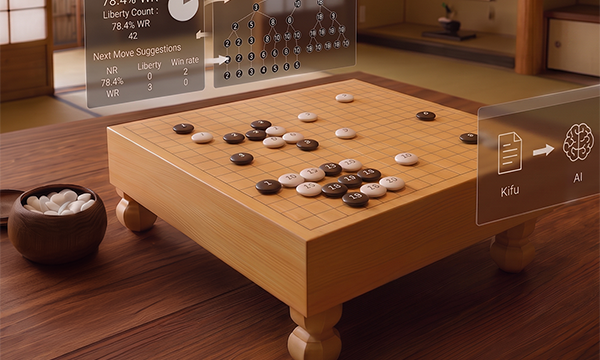
Go Playing-Strength and Style Prediction Competition — Task 2: Predicting Player Rank from Go Game Records

With the rapid development of artificial intelligence (AI), AI performance in board games has far surpassed that of humans. Systems such as AlphaGo and AlphaZero have demonstrated superhuman decision-making capabilities, sparking worldwide interest in and research on human–machine gameplay. Yet surpassing humans also raises a fundamental question: How can AI understand, imitate, and assist people? This competition focuses on precisely such a topic, combining educational applications with behavioral understanding: Go playing-strength prediction.This competition draws on a large collection of real-world human Go game records and applies state-of-the-art deep learning and statistical modeling methods to make predictions about the players associated with those records, thereby advancing practical AI applications in intelligent behavior understanding and game-based education.The competition dataset provides Go game records from human players at 10 playing-strength levels (1D–6D and classes A–D), with 100,000 games at each level. Each record is labeled with the player's playing-strength level and player ID. The objective is to predict the playing-strength level of the player who produced the records in each query game set.RegistrationEvery member of a registering team must log in to the AI CUP Registration System , complete all participant information requested on the registration page, and finish the team-formation process to register for the competition. All team names are assigned by the system and cannot be chosen by participants.On the next business day after a team completes competition registration in the AI CUP Registration System, its members will be able to participate in the competition on the AIdea platform.The competition has a Student Division and a General Public Division. Every member of a Student Division team must have student status. If even one team member is not a student, the entire team will be classified in the General Public Division.After registration, each participant is requested to complete the “Predicting Player Rank and Identifying Players from Go Game Records Competition — Pre-Competition Questionnaire.”After the competition, participants are requested to complete the “Predicting Player Rank and Identifying Players from Go Game Records Competition — Post-Competition Questionnaire.”Participants registering as part of a course should obtain the course code from the instructor or teaching assistant and enter it during registration so that the instructor can later access the competition results for course grading.Q&AIf you have any questions about the competition, please post them in the Discussion Forum. If your question is not suitable for a public forum, please submit it through “AI CUP Fall 2026 — Predicting Player Rank and Identifying Players from Go Game Records”.※ Note: To receive an official response, you must submit your question through the form.Regional Hands-on WorkshopsThe organizer will offer free AI CUP roadshow courses throughout Taiwan. Interested participants are welcome to visit the AI CUP website for the latest news or follow the Facebook page .

2026-09-08T03:00:00+00:00 ~ 2026-12-06T15:59:59+00:00
In Progress

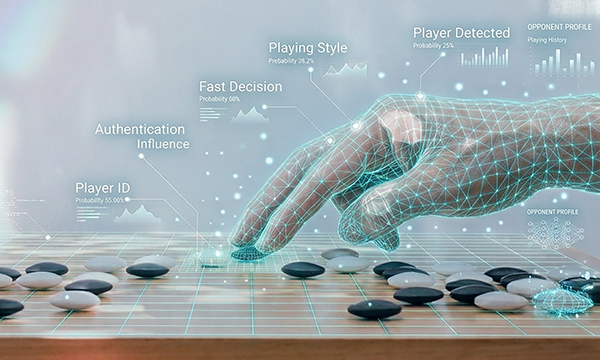
Go Playing-Strength and Style Prediction Competition — Task 1: Identifying Players from a Collection of Go Game Records

With the rapid development of artificial intelligence (AI), AI performance in board games has far surpassed that of humans. Systems such as AlphaGo and AlphaZero have demonstrated superhuman decision-making capabilities, sparking worldwide interest in and research on human–machine gameplay. Yet surpassing humans also raises a fundamental question: How can AI understand, imitate, and assist people? This competition focuses on precisely such a topic, combining educational applications with behavioral understanding: Go player identification.This competition draws on a large collection of real-world human Go game records and applies state-of-the-art deep learning and statistical modeling methods to make predictions about the players associated with those records, thereby advancing practical AI applications in intelligent behavior understanding and game-based education.The competition dataset provides Go game records from human players at 10 playing-strength levels (1D–6D and classes A–D), with 100,000 games at each level. Each record is labeled with the player's playing-strength level and player ID. The objective is to identify which player in the candidate player set produced the records in each query game set.RegistrationEvery member of a registering team must log in to the AI CUP Registration System , complete all participant information requested on the registration page, and finish the team-formation process to register for the competition. All team names are assigned by the system and cannot be chosen by participants.On the next business day after a team completes competition registration in the AI CUP Registration System, its members will be able to participate in the competition on the AIdea platform.The competition has a Student Division and a General Public Division. Every member of a Student Division team must have student status. If even one team member is not a student, the entire team will be classified in the General Public Division.After registration, each participant is requested to complete the “Predicting Player Rank and Identifying Players from Go Game Records Competition — Pre-Competition Questionnaire.”After the competition, participants are requested to complete the “Predicting Player Rank and Identifying Players from Go Game Records Competition — Post-Competition Questionnaire.”Participants registering as part of a course should obtain the course code from the instructor or teaching assistant and enter it during registration so that the instructor can later access the competition results for course grading.Q&AIf you have any questions about the competition, please post them in the Discussion Forum. If your question is not suitable for a public forum, please submit it through “AI CUP Fall 2026 — Predicting Player Rank and Identifying Players from Go Game Records”.※ Note: To receive an official response, you must submit your question through the form.

2026-09-08T03:00:00+00:00 ~ 2026-12-06T15:59:59+00:00
Closed

VeriPromise ESG 2026

As the United Nations Sustainable Development Goals (SDGs) and global net-zero policies accelerate, ESG disclosure has become a defining measure of corporate credibility. Yet many sustainability reports still contain vague or unverified claims, highlighting an urgent need for intelligent verification tools—especially for Traditional Chinese ESG texts, where language resources remain limited.The “ESG Sustainability Commitment Verification Competition 2026” invites you to tackle this real-world challenge. Using the VeriPromiseESG4K Annotated Corpus, built from authentic industry scenarios, participants will develop NLP models that identify sustainability commitments and assess their supporting evidence.This is an opportunity to apply AI to a high-impact global issue, sharpen your skills in ESG analytics and model development, and contribute to greater transparency and trust in corporate sustainability disclosures. This competition provides 4,000 annotated Traditional Chinese ESG entries drawn from real corporate sustainability reports, forming the VeriPromiseESG4K dataset. Participants will apply AI technology such as natural language processing and large language models to develop NLP models capable of automatically identifying, analyzing, and verifying corporate sustainability commitments. Participating teams will utilize the “VeriPromiseESG4K Annotated Corpus” to develop Natural Language Processing (NLP) models addressing the following four core tasks and generate prediction results for the test dataset:Subtask 1: Commitment ClassificationDetermine whether the given text expresses a concrete corporate commitment toward future actions.Subtask 2: Evidence Identification Determine whether the identified commitment sentence is supported by action plans or existing records (e.g., data, methodologies, measures, or any concrete implementation details).Subtask 3: Clarity Classification If evidence is present, evaluate whether the evidence statement is semantically explicit; easy to understand; free from vague wording (e.g., “continuously advancing,” “striving to improve”).Subtask 4: Timeline Classification Based on semantic inference, determine the expected completion timeframe of the identified commitment (calculated from the publication year 2024 of the ESG report).To facilitate participating teams in successfully initiating their model development projects, the organizer will provide relevant technical support and resources, including:Regional Hands-on Workshops: Free in-person workshops will be conducted across three regions, accompanied by parallel online sessions. These sessions will provide detailed explanations of the competition information and demonstrate the use of sample code, guiding participants through fundamental hands-on implementation.Sample Code and Discussion Forum: After teams complete official registration and gain access to the competition platform, the organizer will provide the Sample Code and grant access to the official public discussion forum, where participants may engage in discussions and raise questions.Official Inquiry Form: If you encounter any questions or difficulties during the competition period and are unable to raise them through the official discussion forum, you may submit your inquiries or concerns via Google Form. Upon submission, the Organizer will provide an official response or appropriate assistance.EligibilityStudent Division:Individuals who, from the date of registration until the submission deadline for the competition test set predictions, hold official student status in the Republic of China (Taiwan), are at least 18 years of age, and are currently enrolled in an educational institution at any level are eligible to register for this competition.Minors under the age of 18 may participate with the consent of their legal guardian.Relevant supporting documentation (such as a photocopy of both sides of a student ID card or an original certificate of enrollment) must be submitted when awarding prizes.General Public Division:If any team member does not meet the eligibility requirements of the Student Division (including students currently enrolled in institutions outside the Republic of China), the entire team will be classified under the General Public Division.RegistrationEach team member must register through the AI CUP Registration System (first-time users may refer to the AI CUP Registration System guide for instructions). Participants must follow the on-screen registration procedures, complete all required information, and finalize team formation to complete competition enrollment. Team names will be automatically assigned by the system; participants are not permitted to choose their own team names.Within 1–2 business days after completing competition enrollment via the AI CUP Registration System, an account activation notice and password for the AIdea Platform will be sent to the participant’s registered email address. After completing the activation steps indicated in the email, all team members may access the AIdea Platform to participate in the competition.If participants are registering as part of a course requirement, they should obtain the course code from the course instructor or teaching assistant and enter it during registration. This will enable the instructor to access competition results for course evaluation purposes.Before registration, each participant please complete the "VeriPromiseESG 2026: Pre-test Survey"; after the competition, each participant please complete the "VeriPromiseESG 2026: Post-test Survey".For inquiries, please contact: yyteng@mail.ntpu.edu.tw

2026-03-04T16:00:00+00:00 ~ 2026-07-24T15:59:59+00:00
Closed

基於時序資料之桌球戰術與結果預測競賽

桌球比賽中,每一拍都是瞬息萬變的戰術博弈。本競賽「基於時序資料之桌球戰術與結果預測競賽」以真實桌球比賽影片為素材,透過逐拍標註建構高品質的時序資料,作為競賽基礎,並邀請參賽者發展能理解擊球序列脈絡的人工智慧模型。參賽者需根據前 n−1 拍的擊球資訊,預測下一拍的球種與落點,進而推論該回合的最終勝負。報名方式報名隊伍每位成員須於『AI CUP報名系統』登入報名,並依照報名頁面所示項目,逐項填寫每位隊員之資料,並完成組隊流程,以進行競賽登錄。所有參賽隊伍命名皆由系統給定,無法由參賽者自行決定隊伍名稱。隊伍於『AI CUP報名系統』完成競賽登錄後之下個工作日,各隊伍成員即可於『AIdea平台』參與本次競賽。參賽組別分為學生組、社會人士組。學生組需要全隊皆為學生身分;隊伍內只要有一名非學生身分者,則全隊列為社會人士組。報名後,請每位參賽者協助填寫「基於時序資料之桌球戰術與結果預測競賽-前測問卷」比賽結束後,請參賽者協助填寫「基於時序資料之桌球戰術與結果預測競賽-後測問卷」(之後提供)若參賽者因配合課程而報名比賽,請向課程老師或助教詢問「課程代碼」,並在報名時填寫「課程代碼」,以便後續課堂老師取得參賽結果進行相關課堂評分。

2026-03-02T16:00:00+00:00 ~ 2026-07-17T15:59:59+00:00
/ 指導單位 /
/ 競賽運籌單位 /
/ 主辦單位 /